We're excited to announce that Meritage and Techstars have partnered to help Techstars founders implement EOS - the Entrepreneurial Operating System - with the help of a network of world-class EOS implementers that understand the startup journey - from idea to IPO.
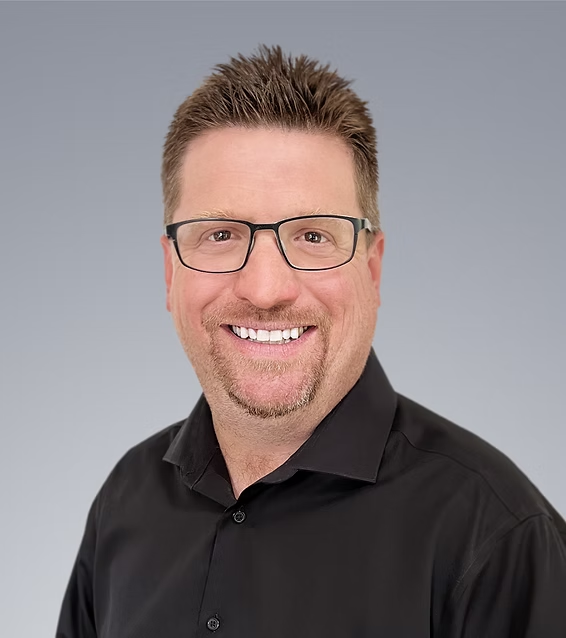
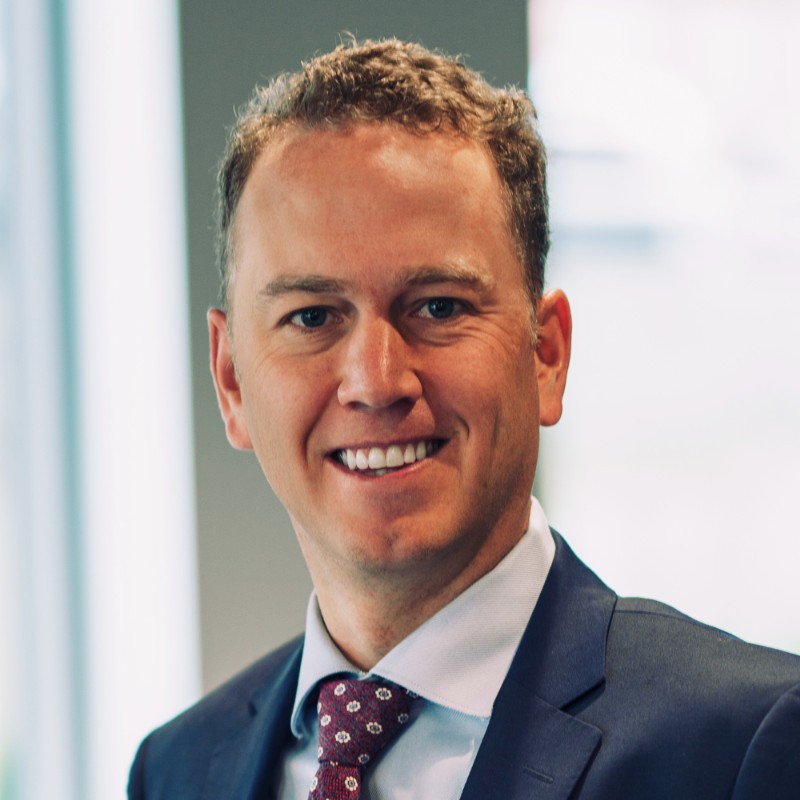
This is something we've both wanted to do for a long time. Bart and I are both Techstars Boulder alums, Class of 2011. EOS is the single operational framework we each wish we'd had earlier, Bart across five companies and four exits, me across my own start-up and then Google, and Atlassian. The founders and CEOs we mentor consistently tell us the same thing: "I wish I'd known about EOS sooner."
Techstars does something irreplaceable in the early days: it gives you the clarity, the network, and the momentum to build something worth betting on. What it doesn’t currently give you in a three-month accelerator program is the operating system for what comes next in the years ahead during the company building and scaling phase. That's the gap this partnership exists to close.
And in 2026, that gap has never mattered more.
Why This Moment Is Different
There's a question every founder is wrestling with right now, and it's not the one you'd expect.
It's not "how do we use AI?" Most of you are already using it. In your product, in your engineering workflows, in your go-to-market motion. The question that actually keeps scaling founders up at night is subtler and harder: as our capacity to execute accelerates, why does our ability to stay aligned keep breaking down?
AI is the most powerful capability multiplier startups have ever had access to. A lean team can now do what once required a department. But here's what nobody talks about enough: multipliers amplify everything - including the cracks.
A team that was slightly misaligned before AI is dangerously misaligned with it. A strategy that lived mostly in the founder's head was survivable when the pace was slower. At AI speed, it becomes a liability. When everyone on your team can move fast, the question becomes: fast toward what, exactly? Who decides? How do you know if it's working?
The companies that win in this environment aren't just the ones who adopt AI fastest. They're the ones who couple that capability with an operating system that can harness it — where everyone understands the strategy, owns their number, and can make good decisions without the founder in the room.
The Thing That Breaks Before You See It Coming
We've each watched it happen from different angles.
I have founded five companies, navigated four exits, raised over $100M in institutional capital, and completed more than 20 M&A transactions. My particular expertise is the zero-to-500-person journey – which is, not coincidentally, exactly where the most preventable damage gets done.
Erika founded and sold a venture-backed startup, then led billion-dollar product lines at Google and Atlassian before serving as CPO at a Nasdaq-listed company. Erika runs implementations at companies from six employees to several hundred, and has watched both failure modes close up.
Here's what we've learned: companies that stall out — that plateau at $5M, churn through good people, or fall apart in diligence — almost never fail because they had the wrong idea or the wrong market. They fail because they didn’t build a scalable company. .
The vision lived in the founder's head.
The leadership team was smart but pulling in slightly different directions.
The metrics didn't connect to the decisions that mattered.
The culture slowly drifted away from what it felt like in the early days.
And by the time it was clearly broken, the cost to fix it had compounded badly. The symptoms feel like a people problem, or a communication problem, or a culture problem.
The root cause is almost always an operating system problem.
What a Great Operating System Actually Does
EOS organizes the fundamentals of running an excellent business into six key components. Not because business is simple, but because complexity has to be mastered through clarity.
Vision. Does everyone in your company — not just the leadership team, everyone — know where you're going and why? Vision isn't a slide deck you show once a year. It's a living document that anyone in the company can use to make better decisions every day. Organizations where strategy is clearly embedded throughout consistently outgrow those where it lives at the top.
People. The right people in the right seats. Both conditions have to be true simultaneously: the person genuinely shares your values, and they have the capacity for the job as it exists today — not as it existed a year ago. Most companies are flying with at least a few people in seats that don't meet this standard. Most know it and are waiting for the right moment to address it. There is no right moment. There's only sooner and later.
Data. A small set of numbers that tell you every week whether your business is on track — without requiring a meeting, a deck, or a lengthy explanation. A well-designed scorecard has roughly ten to fifteen numbers, each with a weekly target, each owned by one person. When a number is off, you know immediately. When everything is green, you don't have to wonder. In the AI era, the volume of signals has exploded — which makes the discipline of tracking the right signals more important, not less.
Issues. A systematic process for surfacing and permanently resolving the obstacles in your business. Every company has issues. The ones that survive are the ones that can address them honestly and thoroughly, rather than tabling them, papering over them, or solving the symptom while the root cause festers.
Process. The handful of core things your business does, documented clearly enough to be taught, followed, and improved. In the AI era, process has never mattered more — because AI doesn't just execute tasks, it executes your system. When your core processes are clear and documented, AI multiplies your ability to deliver them consistently, at scale, with less friction.
Traction. The meeting rhythm, the goal-setting cadence, the decision-making structures that keep your company moving forward in a straight line, quarter after quarter. Ninety-day rocks. Annual planning. Weekly L10 meetings worth everyone's time. The discipline of the 90-day world is exactly what prevents the "always behind, never knowing why" feeling that sets in for most companies between Series A and Series C.
Together, these six components are a complete operating system — the thing that makes your strategy executable by an organization, not just by you.
Techstars Runs on This
We didn't partner with Techstars because it was convenient. We partnered because the alignment is genuine.
EOS is woven into the fabric of how many of the best companies operate. The Techstars alumni network includes dozens of founders who have implemented EOS and will tell you, unprompted, that it was one of the most important operational decisions they made. In fact, Techstars itself has adopted EOS to drive its own alignment and strategic clarity.
If you are a Techstars founder or alum and you want to learn more about EOS or the Techstars/Meritage partnership, reach out to Bart or Erika.
Connect: bart@meritage.vc * erika@meritage.vc